
Oklahoma City Directory Holdings by Era
Oklahoma Historical Society (OHS) is the statewide starting point for printed city and territorial directories. Its catalog search asks for a city or year, while the books themselves are accessed at the Research Center in Oklahoma City. The verified runs below are named examples, not a complete annual record for every town. Later publishers and missing years must be checked by city and year in the catalog or a local library collection.
| Collection | Years | Where Held | Access |
|---|---|---|---|
| Smith’s First Directory of Oklahoma Territory | August 1, 1890–91; published 1890 | OHS Research Center | Name index online and in print; volume access at the center |
| Business and Resident Directory of Guthrie and Logan County | September 1, 1892 | OHS Research Center | Catalog search and onsite research |
| Directory of Garfield County | 1896 | OHS Research Center | Onsite volume |
| Official Directory of Guthrie and Logan County | 1898 | OHS Research Center | Onsite volume |
| Woods County Directory | 1895 | OHS Research Center | Onsite volume |
| Oklahoma City and County Directory | 1900–1901 | OHS Research Center | Onsite volume |
| Later city directories, phone books, and yearbooks | Search by city and year; runs vary | OHS and local public libraries | Catalog, reference desk, microfilm, or licensed database |
Some early titles cover a county, town, or land district rather than a modern city. The table records only runs verified by OHS; the public search form does not expose one full statewide publisher-and-year list. A blank year in a catalog search is a prompt to ask a reference librarian, not proof that a volume was never printed. The Oklahoma Department of Libraries lists public libraries and library systems that can help find local holdings.
OHS describes the Research Center’s catalogs, collections, and reference route. The page helps distinguish a searchable index from the physical holdings available for onsite use.
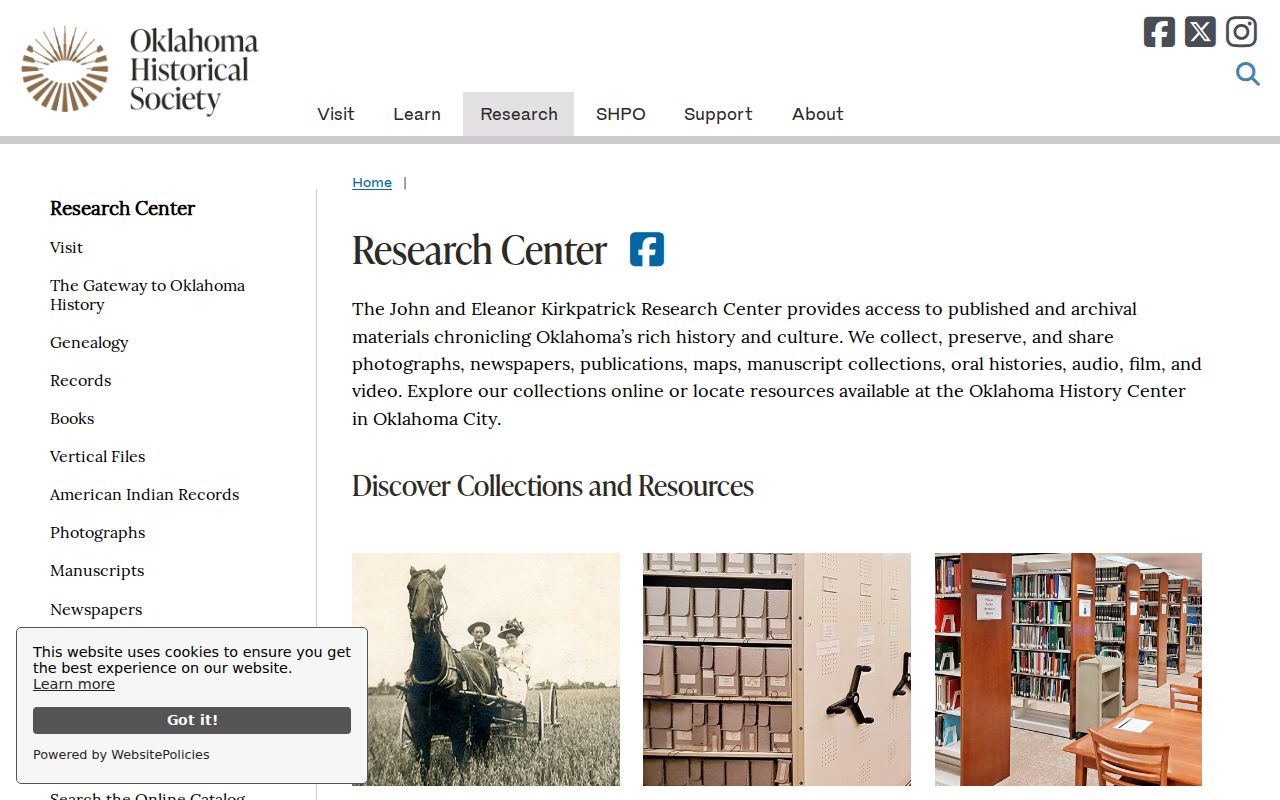
Use the center’s catalog to identify a volume, then confirm its location and access terms before making a trip or placing a research request.
Search Oklahoma City Directories by Year
The OHS directory search has City and Year fields. It is a way to find the relevant holding, not a promise that each book can be read online. The search page says access is at the Research Center. Enter a town name as it appears in the period being studied, then try a county or former place name if the first search misses. A printed directory may sit under a nearby community or a broader county title.
The OHS City Directory search form shows its city-and-year lookup. Check the notice on the result page before treating an index hit as a digitized book.
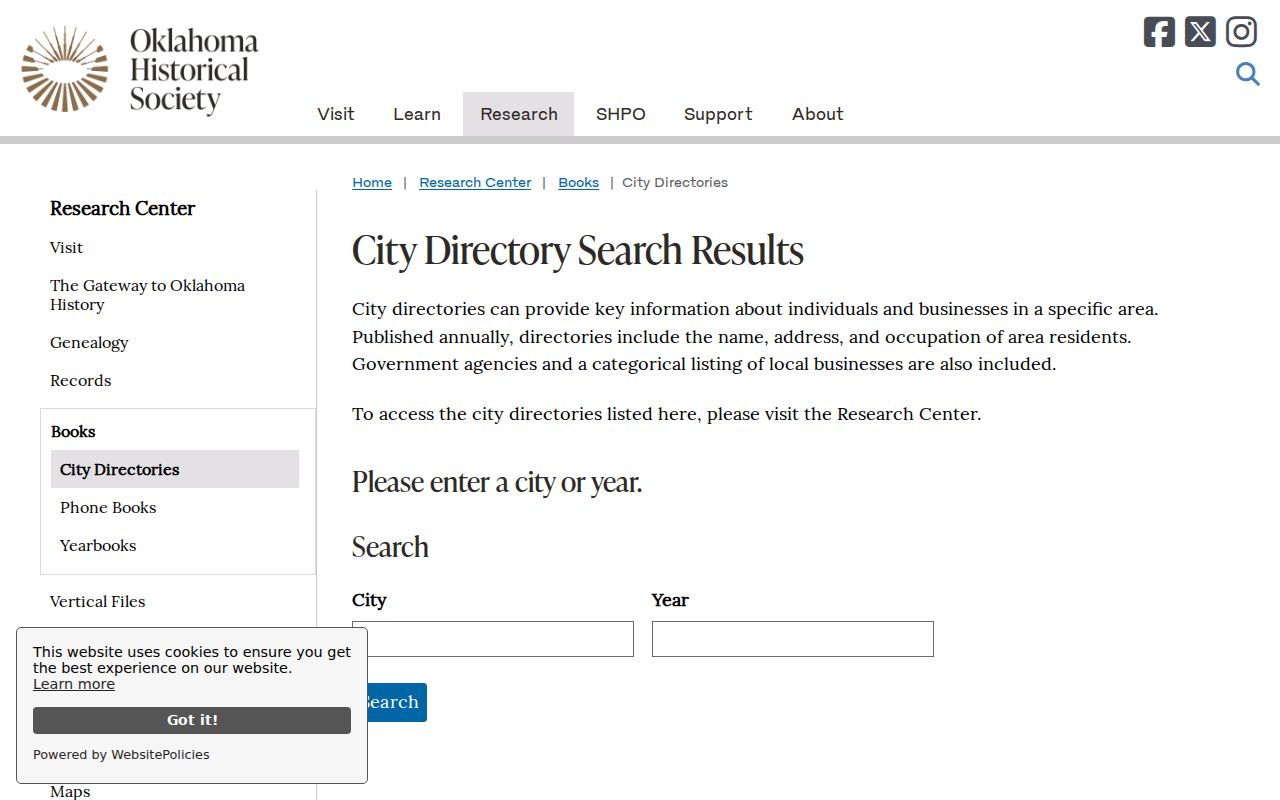
Once a title is found, ask the Research Center whether the volume is onsite, on microfilm, indexed, or available through a research or copy request. For a town outside the OHS run, contact its public library reference desk about local shelves, microfilm, interlibrary loan, and licensed genealogy terminals.
Oklahoma has more than 200 public libraries and eight public-library systems. The Oklahoma Department of Libraries provides a directory for finding the branch that serves a town; each branch’s city-directory, reverse-directory, newspaper, and database holdings still need to be checked individually.
Territorial Names in Oklahoma Directory History
Oklahoma’s earliest named directories sit in a period when records followed territorial and tribal systems as well as towns. The 1890–91 Smith directory is a territory-wide name and land locator. OHS also identifies Guthrie and Logan County volumes from 1892 and 1898, Garfield County in 1896, Woods County in 1895, and an Oklahoma City and County volume for 1900–1901. Those titles do not make a complete annual series, and they do not map neatly to today’s municipal lines.
Statehood joined Oklahoma and Indian Territories on November 16, 1907. OHS says many of the 30 Indian Territory judicial recording-district books were not preserved by the new state counties. That gap matters when a family trail begins before statehood: a directory entry, federal tract book, tribal or agency record, and county deed may answer different questions. It is an Oklahoma geography issue, not evidence that the person or land had no record.
OHS’s land-records guide connects territorial directories with tract books, town records, and county coverage. Its named early publications show why search terms should include both the place and the period’s larger jurisdiction.
For a pre-statehood address, preserve the old place name and check the relevant historical land system before expecting a modern county index to reach back through it.
Match Oklahoma Directory Years to Census
Verified Oklahoma directory titles form a set of dated points, not a continuous statewide run. Federal census schedules provide a separate household snapshot every ten years and are released under the National Archives’ 72-year rule. Use both kinds of records to bracket a move, while keeping the different coverage and purpose of each source clear.
| 1890–91 | Smith’s First Directory of Oklahoma Territory, published in Guthrie |
|---|---|
| 1892 | Business and Resident Directory of Guthrie and Logan County |
| 1895–96 | Woods County Directory, then Directory of Garfield County |
| 1898 | Official Directory of Guthrie and Logan County |
| 1900–1901 | Oklahoma City and County Directory |
| After 1907 | Statehood joined the two territories; later city/year holdings must be checked separately |
Where a directory year is missing, compare the nearest available volume with the census, land records, newspapers, and known family events. A decade census entry and an annual directory line are not interchangeable evidence, but together they can narrow when a household changed address.
Read an Oklahoma City Directory Entry
OHS’s home-history guidance says a directory may connect a person with a spouse, address, occupation or work position, and sometimes an ownership clue or nearby names. The exact marks vary by book. The entry inventory below is a reading checklist, not a claim that every Oklahoma volume contains every field.
| Name | Person’s name, sometimes with initials, spouse, or a cross-reference |
|---|---|
| Address | Printed street number and name; record the period spelling and direction |
| Work | Occupation or position when supplied; it is a clue, not proof of a home address |
| Household marks | Spouse, widow, boarder, owner, or renter notation if that volume uses one |
| Abbreviations | Meaning is set by the volume’s own key and introduction |
- Criss-cross directory
- An address-first section, where one exists, that can connect a street number with a listed name.
- Householder index
- A name-based finding aid to entries; check the volume’s scope and spelling rules.
- Abbreviation key
- The book’s own guide to short forms and symbols. Copy it before interpreting marks.
OHS did not provide a stable digitized sample entry or a single statewide abbreviation key. Read the introduction and index for the actual book in hand. A directory entry is a dated snapshot and may point to a business address, a former address, or one household member rather than everyone at the property.
Oklahoma City Directories with Newspapers
A directory is stronger when paired with a second source from the same place and period. The Gateway, OHS’s digital repository, includes Oklahoma newspapers, maps, photographs, documents, and other materials. Search a name and address separately; older newspaper text may spell out a street number or direction rather than use current numerals and initials.
The OHS Gateway provides digitized Oklahoma newspapers and local-history material. Its searchable items can add an event or business context, but a newspaper mention does not establish a full household or a current address.
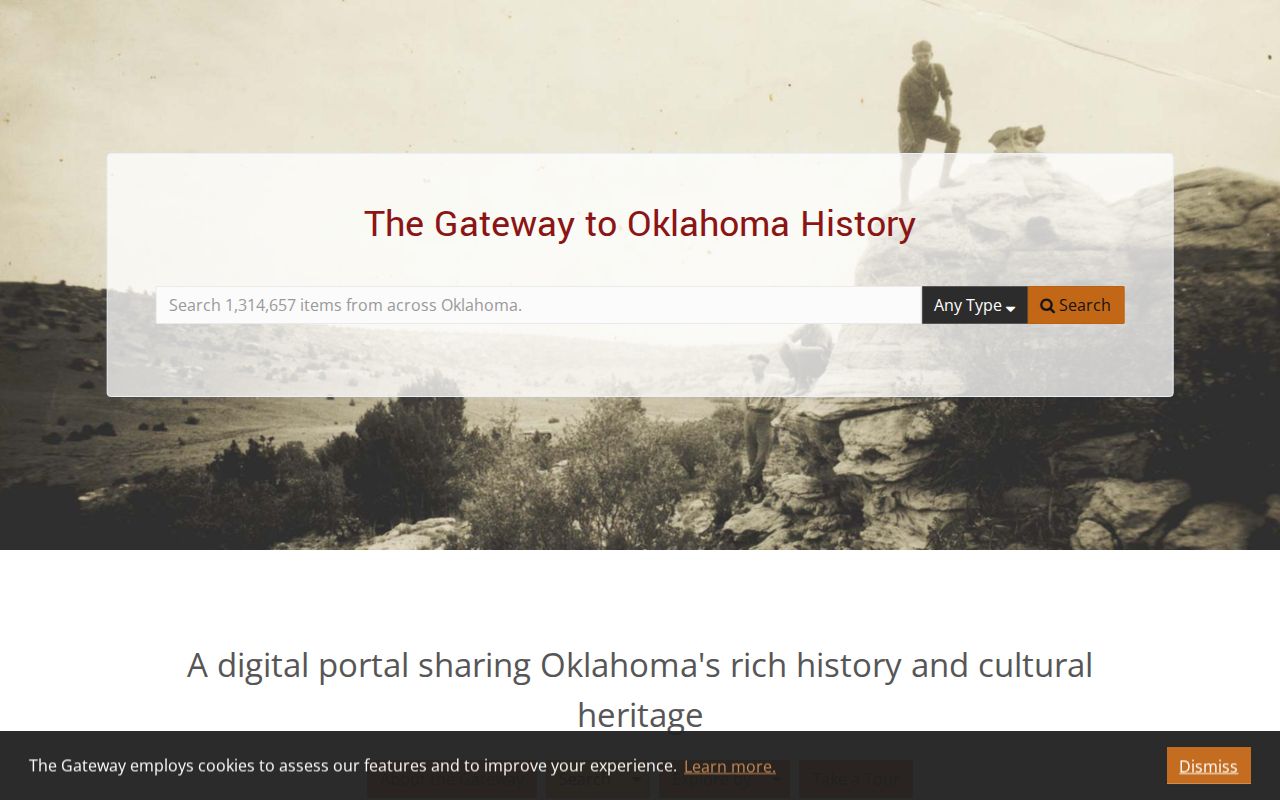
OHS reports more than 3,000 Sanborn maps for Oklahoma towns. These fire-insurance maps can show building footprints, street names, lot lines, construction materials, and some occupants or businesses. Coverage is town- and year-specific, so use a map as a bridge for an address change, not as a list of every household.
Trace a Household through Oklahoma City Directories
Begin with an event or record that gives a likely year and place. OHS recommends linking names, addresses, subdivision names, directories, and newspapers while researching a house. Keep the year beside every address so similar names and street changes do not merge into one person.
- Find the closest directory year to a known census, deed, obituary, or family event, and search the name and spelling variants.
- Copy the complete entry, including spouse, occupation, address, abbreviation marks, and the volume’s page or section.
- Search that street address in the next available year, then repeat with the next name or address that appears.
- Use a reverse section, if the volume has one, to test who was listed at a known address.
- Compare the sequence with federal census years and newspaper or obituary records, without treating the sources as the same kind of record.
Directories were generally annual, while the federal census is a decennial household snapshot. The National Archives releases census schedules under its 72-year rule. A gap in a directory run may hide a move; a person’s disappearance can also reflect a changed name, a different publication area, or an incomplete listing. Check another year and another source before drawing a conclusion.
When a name found in an old directory needs a modern identity check, the Oklahoma resident lookup route compares current record sources without making the historical entry stand in for present-day proof.
Genealogy Holdings for Oklahoma City Directory Research
The OHS genealogy catalog groups city directories with phone books, yearbooks, obituary and probate indexes, census material, tribal records, and military collections. Named resources include the 1890 territorial census, Indian Agency employees in the federal register for 1816–1921, and records for tribal enrollment, schools, and community history. Coverage and access rules vary by collection; use the catalog entry rather than assuming that a name index includes images.
OHS lists its genealogy holdings and research options, including categories that can help when an annual directory does not name a relative.
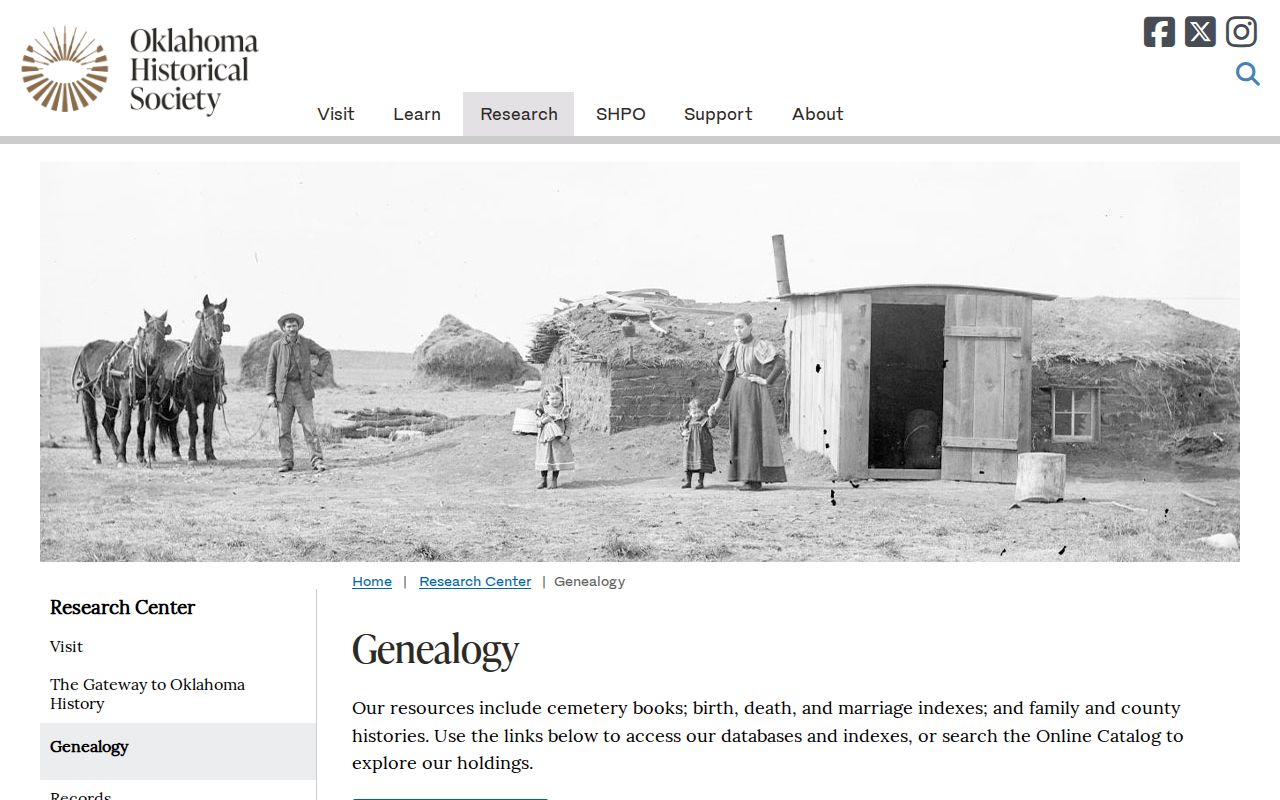
The Research Center is at the Oklahoma History Center, 800 Nazih Zuhdi Drive, Oklahoma City, OK 73105, and its reference desk is 405-522-5225. OHS offers research and copy orders, but asks users to confirm holdings first; copyright limits copies to private study, scholarship, or research. Local libraries can also check microfilm, licensed databases, and interlibrary loan.
For archival records held by the Oklahoma Department of Libraries, request retrieval in advance. The State Archives advises at least two weeks before a visit, while digital items may be available online. Confirm location and access instructions with the archive before travel.